
 Login with Google
 Your Shopping Cart is empty!
  App store
 Google Play
Introduction
Babies are a blessing for every parent, and bringing them home is one of the happiest moments of our lives. Having a baby in your life adds a long list of responsibilities that every parent must fulfill. These responsibilities aren’t a burden but a set of a few essential tasks that parents must complete with love and care.
New parents find simple tasks like bathing or changing diapers overwhelming at first. But the truth is, proper hygiene is a baby’s birthright. Even while these tasks initially feel overwhelming, they actually aren’t that complicated. All it needs is a positive approach, consistency, care, and a smile that makes your baby feel loved and cared for.
This guide is here to help parents who consider baby hygiene essentials a challenging routine. From bathing and skincare to diaper care and feeding safety, everything will become simple and easy to execute with this guide.
This guide comes with practical baby care tips for parents. They will help you build a smooth newborn hygiene routine, keeping your little one happy, healthy, and comfortable.
Why Baby Hygiene Is So Important
When you hold your baby in your arms, you will experience that your baby's skin is softer, smoother, and more fragile than an adult's skin. Hence, their delicate skin needs special treatment. Besides being soft and delicate, a baby’s immune system is still developing, making him more vulnerable to infections, touches from unknown people, diaper rashes, and digestive issues. If you want your baby to become strong and develop into a healthy child, it needs proper hygiene and a safe and clean environment that ensures a well-protected baby’s health.
Parents must be careful while attending to their baby’s needs and accept the importance of baby hygiene as a serious matter. This hygiene awareness helps prevent common issues like diaper rash, skin irritation, and stomach infections. A baby health care tips routine makes sure that your kid grows well and remains safe and secure at home.
This newborn care guide will enable you to build healthy habits for your child. A few simple steps in hygiene for infants can make a major difference to your baby’s health and support their overall growth.
Baby Bathing Basics: Keeping Your Baby Clean and Safe
Baby, Bathtub, and Bubbles make a great team.
Bathing, the most exciting and adventurous activity for any baby, doesn’t go well without their beloved waterproof, durable, and baby-safe bath toys. Getting your baby ready for a bath isn’t difficult, and it isn’t about daily scrubbing. It is actually about taking gentle care of the baby, ensuring his safety, and helping him with sensory development.
Just because adults move out in the sun and are involved in activities that make them perspire a lot, they bathe daily. Contrary to this, newborns don’t need to bathe daily. A 2 to 3 times weekly bath is more than enough. Overbathing your baby can be dangerous as it can dry out their sensitive skin.
Whenever you decide to bathe your baby, take adequate care to maintain the softness and delicacy of their skin. Begin with lukewarm water for a bath. No estimations, no surprises. Keep a thermometer handy. Check the water temperature before carrying your baby and placing him in the tub. It is always a great idea to keep your bathroom well-ventilated, saving your baby from suffocation. You can have an exhaust fan installed in the bathroom window. It will help send the hot air out and fresh air inside the bathroom. Circulating air keeps your bathroom fresh, safe, and lively.
Follow these simple baby bathing tips:
- Use mild, fragrance-free products.
- Bath time should be around 5 to 10 minutes only.
- Secure the baby’s head and neck at all times.
- Use a baby-soft towel to dry the baby. The drying action should be gentle, especially in skin folds.
Always follow a consistent baby bath routine. Make sure that the process is easy for both parent and baby. Practice the bathing technique with confidence and ensure your baby stays clean without discomfort.
Baby Skin Care: Gentle Protection for Delicate Skin
Your baby’s skin is soft and still developing. Hence, it needs that extra care because it is thinner, more tender, and highly sensitive compared to adult skin.
Switch to a simple baby skin care routine without complications:
- Apply a moisturizer made for babies after baths.
- Use mild, hypoallergenic products to suit the baby’s skin type.
- Always use chemical-free and fragrance-free products.
To avoid confusion, you can always visit Shopright to choose from our range of gentle baby products that are specially made for infants. Select baby lotions for sensitive skin; keep their dryness and irritation away.
Follow these newborn skin care tips:
- Keep their skin clean and dry.
- Use soft fabrics
- Protect from direct sunlight.
Take adequate care to maintain healthy baby skin and prevent unnecessary rashes or irritation.
Diaper Hygiene: Preventing Rashes and Infections
Diapers are a great way to ensure your baby’s comfort when they urinate or have bowel movements. While diapers are a great help both for babies and their parents, changing them regularly is a critical part of daily baby hygiene.
You should use tape-style diapers for newborns as they are easy to change without disturbing your baby. Later, switch to pants-style diapers if your infant is too active and begins crawling or walking. Pants-style diapers offer freedom, whereas the tap-style might hinder the child’s mobility. Remember to check and change diapers frequently. An ideal time span is 2 to 3 hours or immediately after a bowel movement. It is never a good idea to leave a wet or dirty diaper for too long. It causes rash and irritation to the baby’s tender skin. There are chances of the baby developing infections.
Diaper-Free Time (skin breathing time):
A concept that a few parents either ignore or are unaware of. Science has proved that our skin breathes. Hence, it is essential to allow a diaper-free time of 10 to 30 minutes at least 2 to 3 times a day. This approach helps the baby’s skin to relax, repair, and achieve its natural form, reduce skin irritation, ensure healthy skin, and maintain its elasticity.
An effective way to prevent diaper rash is to use a protective cream and keep the skin area dry. Ensuring proper baby diaper care keeps your baby comfortable, happy, and irritation-free all day long.
Best diaper-free times are
- After a warm water bath,
- After playtime, or
- A few minutes before going to bed.
The best way to avoid infections and clean your baby after a diaper change is to always wipe him from front to back using water and a soft cotton cloth, or wet wipes. Never clean the baby the other way round. Make sure that the baby's skin is completely dry before putting on a new diaper.
Key diaper hygiene tips include:
- Clean the baby gently using water or wipes
- Softly pat dry before putting on a new diaper
- Allow some diaper-free time
Hand and Oral Hygiene for Babies
COVID-19 has taught us how important hand and oral hygiene are. With time, people have started switching back to their old, unhygienic habits. In the case of babies, you cannot overlook or ignore these hygiene necessities.
Babies understand their surroundings and especially this world through touch and feel. They touch every surface with their hands, resulting in the exchange of germs. They even have the habit of dropping food on the floor and eating it there after. If your child also has this habit, then it is more than essential to maintain your baby’s hand hygiene. Now you need to do two things without fail. First is to clean their hands frequently, especially before feeding, and the second task is to ensure that the floor remains clean and germ-free when the baby is around.
For oral care:
- Start baby oral hygiene early.
- Gently wipe gums with a clean cloth.
- Begin cleaning baby's gums even before teeth appear.
Once you see his teeth coming in, buy a simple infant dental care toothbrush and start using it daily.
Develop a practice to sterilize the baby’s pacifiers and toys regularly. This habit will reduce his exposure to germs, bacteria, and contaminants.
Food Hygiene: Safe Feeding Practices for Babies
There is no alternative to feeding your baby with hygienic and nutritious food. Safe and genuinely nutritious baby foods are essential for strengthening the baby’s immune system and preventing infections and digestive issues.
Always adopt these baby food safety tips:
- First, wash fruits and vegetables thoroughly.
- Make sure to sterilize feeding bottles and utensils.
- Ensure proper and safe food storage.
- Always keep the baby’s food properly covered.
Preparing baby food needs that extra care and understanding before feeding.
Make sure to adopt the following safe feeding practices for babies. Take care so that your child gets clean, safe nutrition. Maintain strict hygiene in the baby feeding process. Protect your baby’s developing digestive system.
Safe feeding practices for babies:
- Always wash your hands and clean utensils before preparing or feeding food.
- Thoroughly wash fruits and vegetables before making baby food.
- Properly sterilize the bottles, spoons, and bowls to make them germ-free.
- Use clean containers. Store food at the right temperature to avoid spoilage.
- Always feed freshly prepared food. Avoid adding excessive salt, sugar, or strong spices to the baby’s food.
- Don’t reuse leftovers. Discard unfinished food to stop bacterial growth.
A clean feeding routine means a healthier tummy and a happier baby.
Essential Baby Hygiene Products Every Parent Needs
When your purpose is to take care of your baby in every possible way, why not switch to the right products that make baby care an enjoyable and memorable experience?
Here is a baby care product list for every parent to have:
- Mild (chemical-free) baby soap and shampoo,
- Soft towels and napkins,
- Diaper rash cream,
- Soft wet wipes for babies,
- Bottle sterilizer,
- Baby-safe detergents.
Keeping these baby hygiene products well-stocked at home will make your baby care routine simpler and more effective. The following table, comprising a simple newborn essentials checklist, will help you stay equipped.
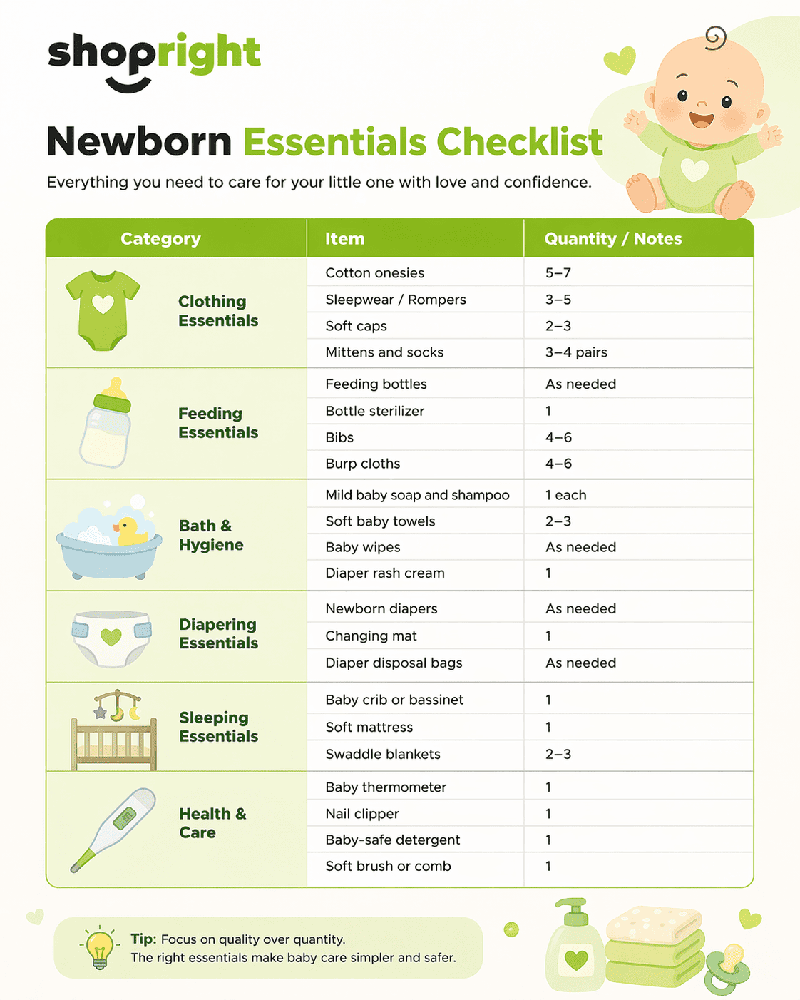
When you have to decide between the must-have baby items, focus on quality over quantity. Cheaper products may not always be good for your baby.
Daily Baby Hygiene Routine for Busy Parents
With both parents engaged professionally, a proper baby care routine becomes a major challenge. But there is always a way out if you decide to achieve something. Here, we have a simple routine to make your baby’s day care routine smoother.
Let’s have a look at this easy baby's daily routine:
Morning:
- Clean face and hands
- Change diaper
- Feed proper hygienic food
Afternoon:
- Regular diaper checks
- Clean or sanitize your hands before feeding the child
Evening:
- Gentle bath (if scheduled)
- Apply a moisturizer to smooth the baby’s skin
Night:
- Final diaper change before bedtime
- Secure the baby properly in his bed
- Clean feeding tools
Parents need not fear the newborn hygiene routine. All they need is to stay consistent in their efforts. A regular practice will reduce stress and make baby care routine a fun-filled activity. Besides, it is true that a well-structured baby care schedule helps parents stay organized and keep everything manageable.
Common Baby Hygiene Mistakes to Avoid
Having a baby is indeed exciting for first-time parents. Even while the intentions are affirmative, a few mistakes can make your baby feel uncomfortable. With little care and little awareness, parents can take the following precautions to avoid common baby care mistakes:
- Don’t overbath your baby
- Never use harsh products
- Dry them properly after baths
- Ensure proper bottle hygiene
Parents should make efforts to prevent newborn hygiene mistakes and improve their routine.
Shop Baby Care & Food Essentials at Shopright
When you value quality and the brand for your baby’s needs, why visit different stores? You should be driving to Shopright, your friendly neighborhood store, where you get everything in one place.
At Shopright, parents can find a wide variety of trusted baby essentials, from hygiene products to fresh food options. Whether you are looking for baby products, planning to buy baby care products in Cayman, or searching for quality baby food and groceries in Cayman, Shopright offers convenience, reliability, and affordability.
Visit your nearest Grocery store in Cayman or shop online to make baby care simple and stress-free.
Conclusion
Baby hygiene is not about perfection. It is about simple, consistent care. With the right habits and products, you can create a safe, comfortable environment for your baby.
Focus on gentle routines, safe products, and consistent care. Over time, these small efforts lay a strong foundation for your baby’s health and happiness.
FAQs
Newborns only need a bath 2 to 3 times a week. Overbathing can dry their skin, so keep it minimal and gentle.



.jpg)