
 Login with Google
 Your Shopping Cart is empty!
  App store
 Google Play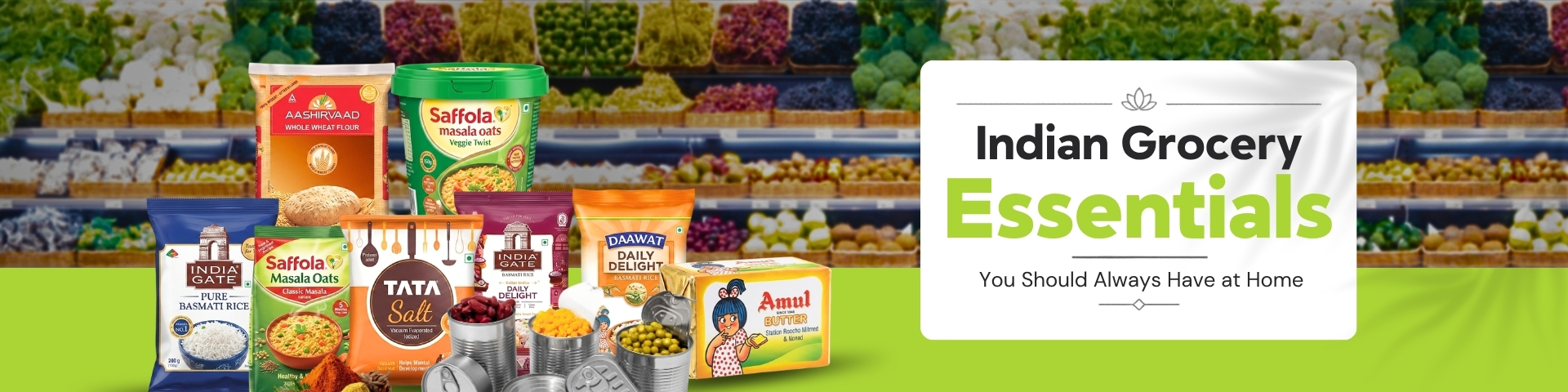
Introduction
There’s something comforting about knowing your kitchen is always ready for a good meal. Whether it’s a busy weekday dinner, unexpected guests, or simply a craving for homemade food, having the right Indian groceries at home makes cooking feel effortless instead of stressful.
Indian cooking isn’t built around complicated techniques — it’s built around a few reliable staples that come together in countless ways. Rice, lentils, spices, flours, and everyday condiments quietly form the foundation of almost every meal.
This guide walks you through the essentials worth keeping in your pantry so you’re never stuck wondering what to cook.
Why a Well-Stocked Indian Pantry Actually Makes Life Easier
A good pantry doesn’t just save time — it changes how you cook.
When the basics are already in place, you don’t need to plan every meal from scratch. You naturally start building dishes around what’s available, which makes everyday cooking faster and far less stressful.
It also reduces those last-minute grocery runs that somehow always happen at the worst time. More importantly, having Indian cooking staples at home encourages more home-cooked meals instead of relying on takeout.
In simple terms, a stocked pantry gives you flexibility — you can cook simple comfort food one day and something more elaborate the next without much effort.
Similar Blog: Essential Pantry Checklist: Must-Have Items for Every Cayman Kitchen
Rice: The Foundation of Countless Indian Meals
Rice is one of those ingredients that quietly holds everything together. In most Indian homes, it’s never missing.
It could be a simple bowl of dal and rice after a long day, or a fragrant biryani prepared for a family gathering — rice fits into every situation.
Basmati rice is often reserved for special meals because of its aroma and long, elegant grains. For everyday cooking, simpler rice varieties are used because they’re quick, filling, and versatile.
The beauty of rice is its adaptability — it doesn’t try to stand out, but it completes the plate every single time.
Lentils: Simple Food That Feels Like Home
If there’s one ingredient that shows up in Indian kitchens almost daily, it’s lentils.
They’re affordable, filling, and incredibly versatile. A basic dal can be light and comforting, while dishes like rajma or chole bring something more hearty and rich to the table.
Moong dal cooks quickly and feels light on the stomach. Masoor dal is perfect for busy days when you want something simple but nourishing. Toor dal is what many people associate with traditional everyday meals.
Lentils aren’t just food — for many, they’re comfort in a bowl.
Spices: Where Real Flavor Begins
Indian food doesn’t rely on complexity — it relies on spices.
Even the simplest dish transforms completely once spices hit the pan. A pinch of turmeric adds warmth, cumin builds depth, coriander balances flavors, and red chili brings heat.
And then there’s garam masala — usually added at the end — which ties everything together in a way that feels complete.
What’s interesting is that spices don’t just season food in Indian cooking; they define it. Two similar ingredients can taste completely different depending on how they’re spiced.
Similar Blog: Must-Try Indian Regional Dishes Using Local Caribbean Ingredients
Everyday Flours and Grains You’ll Always Need
Flour might not be the most exciting part of the pantry, but it’s one of the most important.
Whole wheat flour (atta) is what keeps fresh rotis and parathas coming to the table every day. Besan, or gram flour, shows up in everything from crispy snacks to savory pancakes. Semolina is another quiet staple used in breakfasts and quick sweets.
These ingredients don’t usually get attention, but they’re what make everyday meals possible.
Oils, Ghee, and the Small Things That Change Everything
Cooking oil might be a basic necessity, but ghee is what adds character.
A spoon of ghee over hot rice or dal can completely change the taste of a simple meal. Oils handle everyday cooking, while ingredients like tamarind paste, pickles, and chutneys add contrast and sharpness.
These aren’t just extras — they’re what make meals feel complete instead of flat.
Quick Options for Busy Days
Not every day allows time for cooking from scratch.
That’s where ready-to-cook mixes, frozen foods, and instant options come in handy. They’re not meant to replace home cooking, but they help when life gets busy.
Having a few of these on standby means you always have a backup plan for days when cooking from scratch just isn’t realistic.
Snacks and Tea-Time Staples
In many Indian households, snacks aren’t occasional — they’re part of the routine.
Tea and biscuits in the afternoon, namkeen during conversations, or something crunchy to offer guests — these small things shape everyday moments.
Even something as simple as a cup of tea feels incomplete without a little snack alongside it.
Keeping Your Pantry Organized Matters
A well-stocked pantry is only useful if it’s organized.
Airtight containers help keep ingredients fresh for longer. Spices should be stored away from heat and sunlight so they don’t lose their aroma. Grouping similar items also makes cooking faster because you always know where things are.
It’s a small effort, but it makes daily cooking noticeably smoother.
Getting Indian Groceries in Cayman Made Easy with ShopRight
Finding authentic Indian ingredients outside India isn’t always easy, especially when you want everything in one place.
That’s where ShopRight helps simplify things. From rice and lentils to spices, snacks, and everyday cooking essentials, it brings together a wide range of Indian grocery items for households in the Cayman Islands.
Instead of visiting multiple stores, you can get everything you need in one go and focus more on cooking and less on searching for ingredients.
Conclusion
A good Indian pantry isn’t about having everything — it’s about having the right basics.
Rice, lentils, spices, flours, and a few everyday essentials are enough to create endless meals without much effort. Once these foundations are in place, cooking stops feeling like a task and becomes something more natural and enjoyable.
It doesn’t happen overnight, but building it step by step makes all the difference.


.jpg)