
 Login with Google
 Your Shopping Cart is empty!
  App store
 Google Play
Introduction
After returning from the grocery store, the first step everyone takes is to open their refrigerator and possibly dump everything into it. Beginning with milk that first goes into the refrigerator, followed by vegetables reaching for the crisper drawer, and ending with the fruits squeezing themselves perfectly inside the fruit compartment of your refrigerator. Is that what you also do after returning from the neighborhood grocery outlet? This step is quite obvious for most households as it is perceived as the safest way to keep everything fresh.
But the truth is harsh and way different from how one feels because this habit does more harm to your family's health than you can ever imagine.
Many fruits begin their journey as raw and gradually ripen with time. This is a natural process that happens after harvesting. Now, when the process is still in action, placing those fruits in a cold environment actually inhibits and interrupts this natural cycle, causing damage to the fruit.
The outcome in this case is bland taste, poor texture, and a shorter lifespan of the produce. A refrigerator is a useful invention, but it has limitations on what it can preserve and what it cannot. For most fruits, the fridge doesn't preserve their quality. On the contrary, this refrigerator depletes these fruits of their natural sweetness, texture, and aroma, making them far from being delicious.
So, then what is the solution to saving your favorite fruits from getting wasted? The best remedy is to understand a few simple fruit storage tips that can not only preserve these fruits naturally but also bring in a noticeable difference to your kitchen environment while supporting your family's health.
As the key member of your family, your primary responsibility is to know the Fruits that should not be refrigerated. Once you know this, your next step is to learn how to store fruit properly, while avoiding common fruit storage mistakes.
You don't need Google around, as this guide will help you preserve your produce appropriately while enjoying better-tasting produce and reducing unnecessary waste.
Why Proper Fruit Storage Matters More Than You Think
Soon after harvesting, do understand that these fruits are leaving their natural habitat and moving ahead to a different environment. They try to survive in this new environment, but not for long if stored improperly. Is fruit storage simply making these fruits last longer, or is it something beyond that?
Fruit storage is actually about preserving it in its natural form while ensuring its good taste, feel, and even saving it from ending up in the trash. Fresh fruits, vegetables, and many other products are nature's gift to us, and it is our responsibility to make the best of this gift. This is the core reason why we should always consider proper food storage in the interest of our society.
It is nature's way of expressing love, because of which many fruits continue to mature even after being picked. Natural sugars develop, acids balance out, and aromas become richer, making this period much more crucial. This process actually gives us the final product that's great for consumption. But when these fruits are placed in unsuitable temperatures, it hinders the natural ripening process, damaging the fruit altogether. This is a sad truth that people rarely understand.
If you don't want your hard-earned money to be wasted, start following proper fruit storage practices on your end. These proven practices will let you enjoy fruits at their best. Follow fruit freshness tips by ensuring proper preservation of fruits and maintaining their quality instead of simply extending their life. What sense does it make to extend a fruit’s life when it has lost all its benefits?
So, make small adjustments to your fruit storage habits. These adjustments will enable you to keep your fruit fresh longer while optimizing your money and effort.
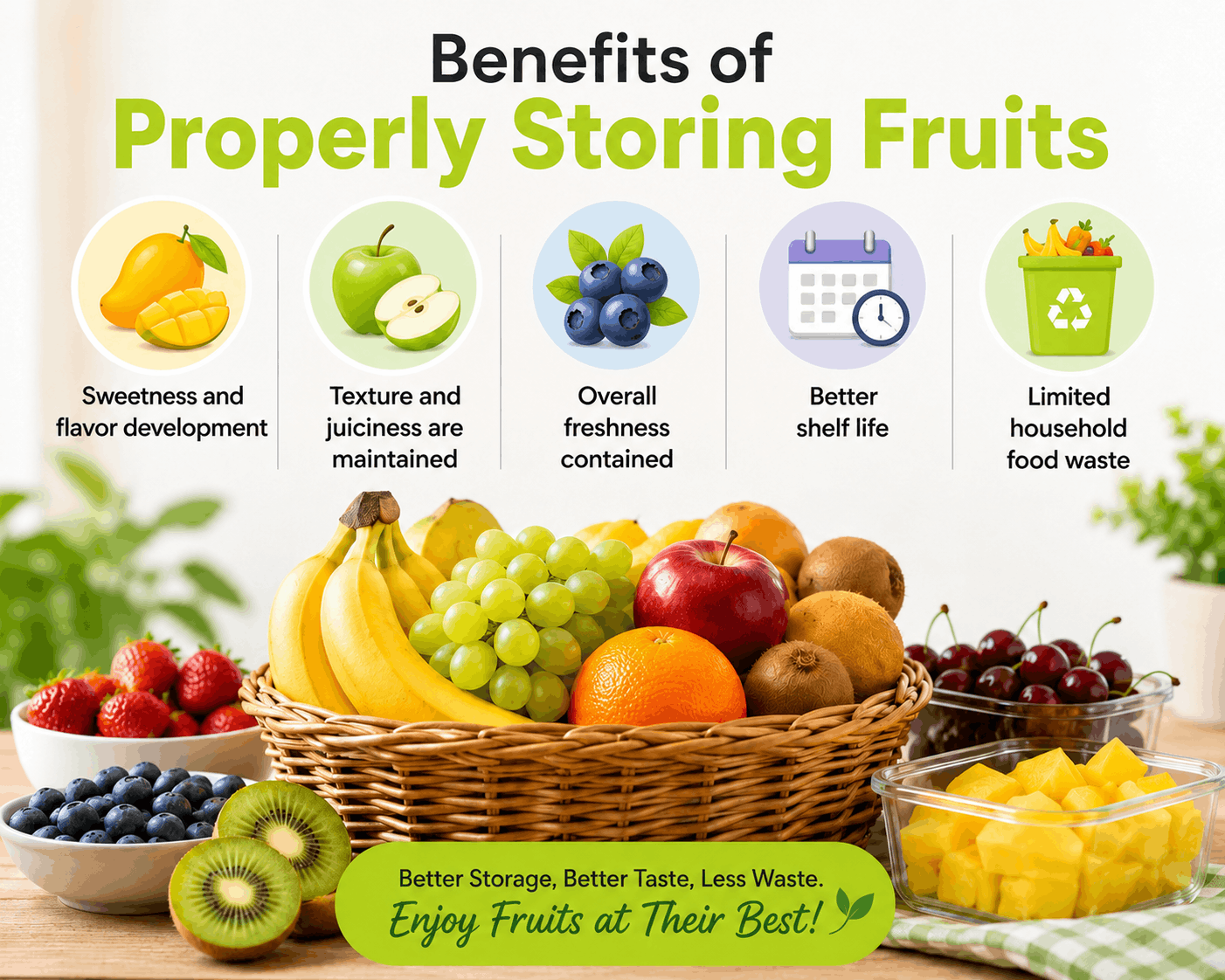
Take a look at the following image to learn the benefits of properly storing fruits.
The Science Behind Fruit Ripening
Raw fruit ripens because its DNA carries those instructions. But to execute those instructions, the fruit needs a Master Regulator of Hormone called Ethylene Gas (C2H4). It is the presence of ethylene gas that causes fruit to initiate the natural ripening process.
During the fruit ripening process, the following three phenomena occur:
- The fruits start to soften,
- They begin to sweeten in taste,
- They develop a special and unique aroma by breaking down starches and degrading chlorophyll.
The fruit ripening process is slow and continues even after certain fruits are harvested, picked, and transported to the grocery stores. In the course of ripening, these fruits naturally release ethylene gas. The presence of ethylene gas indicates that the fruit is now softening, sweetening, and developing flavor that's unique to that fruit.
After years of research, scientists have classified fruits into two categories:
- Climacteric fruits: These fruits continue to ripen even after harvesting. Fruits like bananas, mangoes, avocados, apples, peaches, and tomatoes belong to this category.
- Non-climacteric fruits: These fruits, on the other hand, do not significantly ripen even after they are picked. These kinds of fruits mostly preserve their existing state. Strawberry, Blueberry, Raspberry, Blackberry, Grapes, Orange, Lemon, Pineapple, and Watermelon belong to this category.
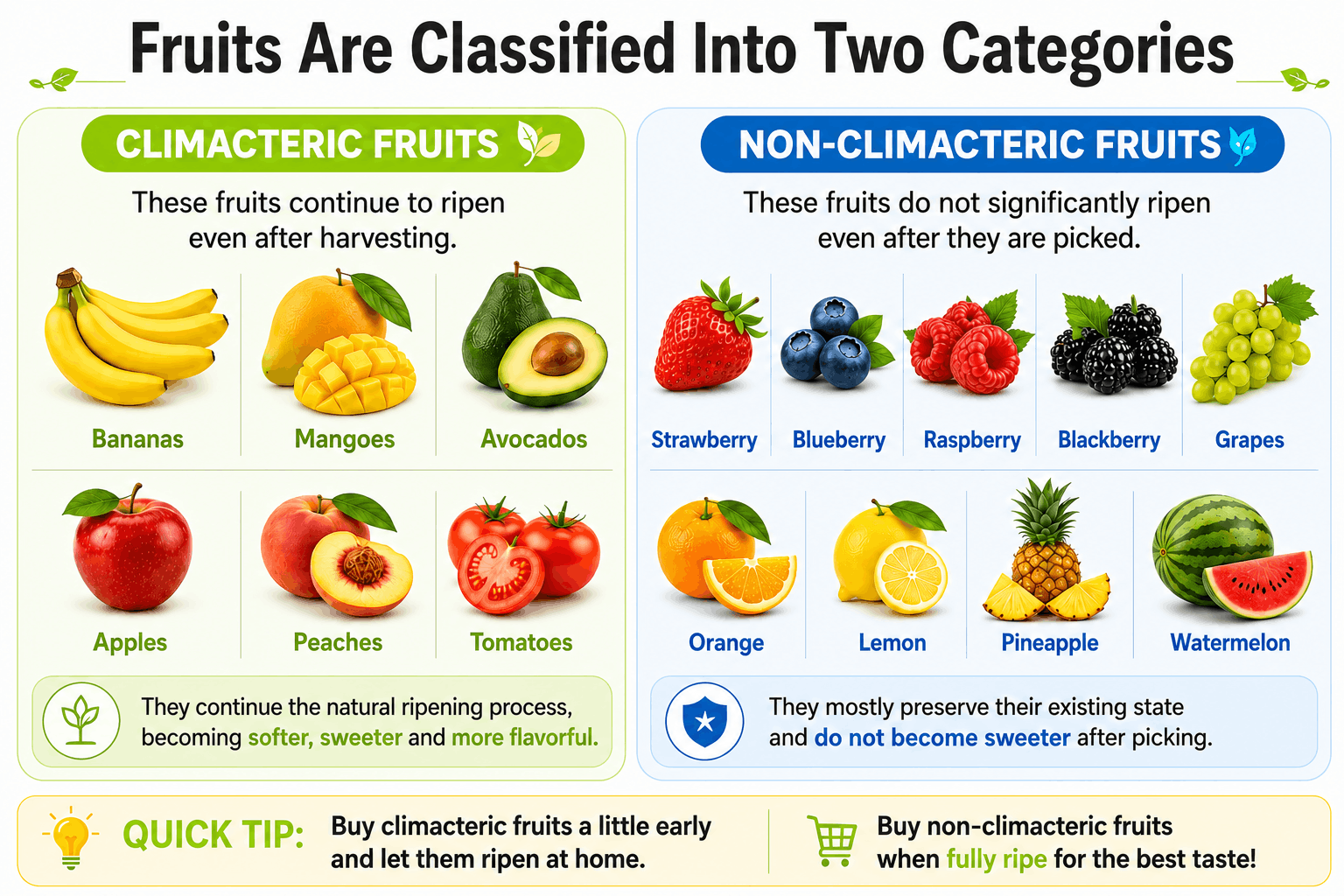
There is a difference between naturally cold temperatures and the temperature present in refrigerators. Where cold temperatures generally slow down the chemical reactions that ripen the fruits, refrigerators help preserve already ripe produce.
A simple tip for our readers:
- If some fruit starts getting sweeter after sitting on your kitchen counter, it's usually climacteric.
- If some fruit simply softens or eventually spoils without becoming sweeter or releasing a different aroma, it's generally non-climacteric.
When users understand the secret of how fruits ripen, they automatically know when to refrigerate some fruit to preserve it and when it is advisable to avoid refrigeration.
Why don't we follow a simple thumb rule? Allow the fruit to ripen naturally and consume it thereafter or refrigerate an already ripe fruit to preserve it.
Bananas: The Most Common Refrigeration Mistake
Select any household, and you will find bananas in good quantities, ready to be eaten. Not only kids, but also adults and senior citizens love relishing bananas. Bananas, a powerhouse of minerals, vitamins, healthy carbohydrates, and ample energy, are the biggest victims of an incorrect storage system.
The moment these bananas arrive from the store, they are placed directly into the refrigerator. People do this, believing that it will keep the bananas fresh; sadly, this is a very big myth that one must understand.
For an average family of 4 to 6 members, the total quality of bananas purchased would be two dozen or slightly more. It is practically impossible to finish eating all of them at a time. Hence, shoppers consider the fridge as a suitable place to store their beloved bananas. What happens next will surely shock you. Contrary to your presumptions, the cold temperatures of the refrigerator will soon begin darkening the banana peel and interfere with its normal ripening procedure, and that is something we never expected to happen.
With much confusion prevailing, users generally wonder, "Should bananas be refrigerated?" The official answer is NO while your bananas are still ripening. When bananas help you enjoy every bite, why create a hindrance in their natural ripening process?
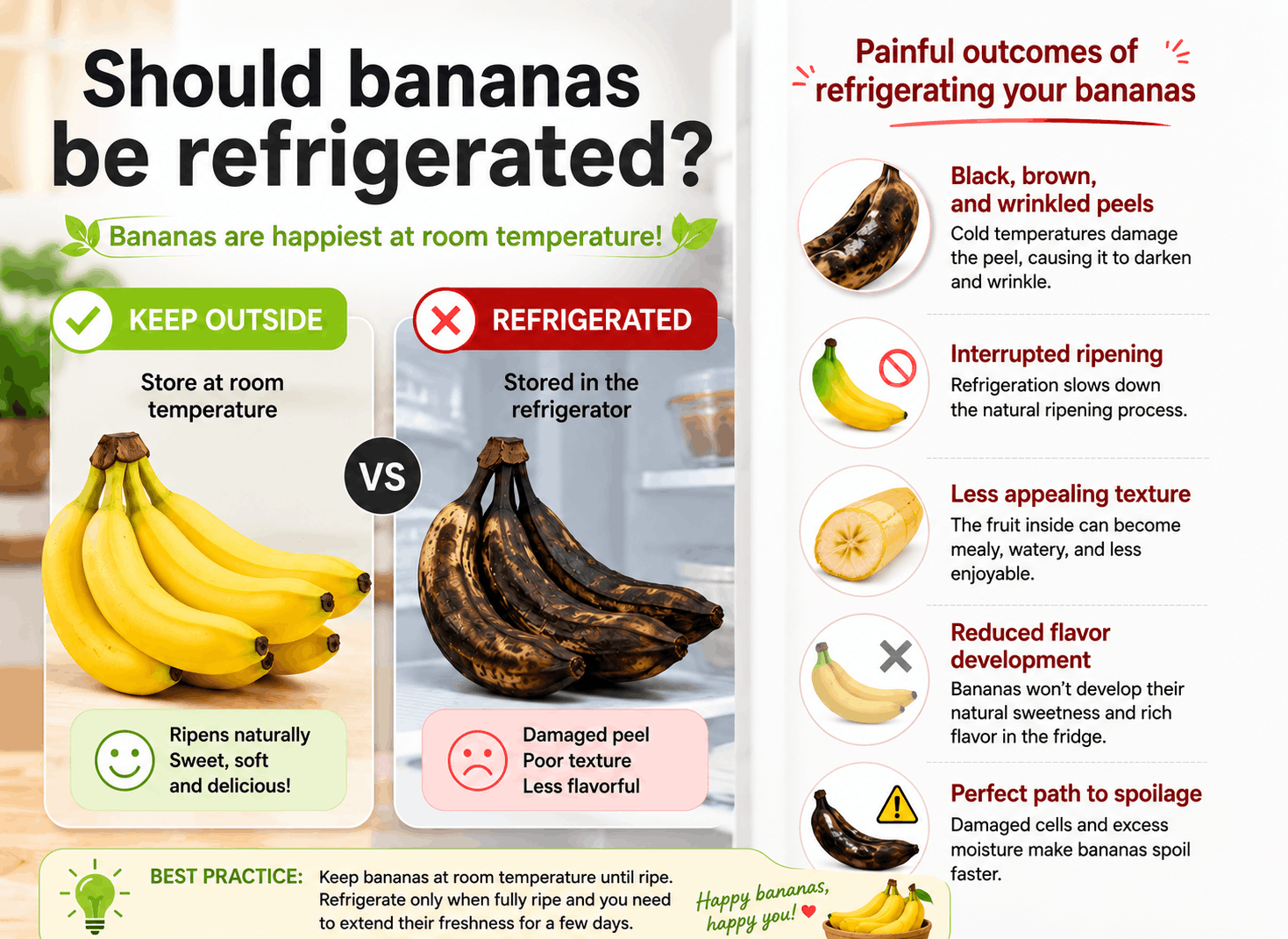
The fruit inside may remain edible, but its appearance and eating quality can suffer.
As part of effective banana storage tips, experts recommend keeping bananas at room temperature. Ensure that the place is well-ventilated and your bananas stay away from direct sunlight. Putting them in a basket placed in the corner of your kitchen table is a decent location to preserve them. Enclosing them in an airtight container is not a welcome step, as the accumulated moisture can damage them easily.
Your bananas are perfectly ripe, but you cannot eat them immediately because you have a dinner invitation elsewhere. In such a situation, refrigeration becomes your only hope. The succeeding outcome will be darkened peels with the flesh intact inside, keeping it suitable for eating. If the looks don't delight you, go ahead and use these bananas in making smoothies, milkshakes, or bake yourself crispy golden brown banana egg rolls with salted caramel, a dessert that will delight you for sure.
It is a matter of common understanding that helps you with how to keep bananas fresh. Storing bananas correctly isn't that big a challenge. All you need to do is allow them to ripen naturally. Once ripe, put them in the refrigerator as your next step.
Tomatoes, Avocados, and Mangoes Need Time to Ripen
Tomatoes, Avocados, and Mangoes are unique in the sense that they need time to ripen naturally. If kept in the fridge too early, they often lose their best qualities and beautiful taste.
Tomatoes
Are tomatoes, vegetables, or fruits? A common perception is that tomatoes belong to the vegetable family, while the reality is otherwise. They actually are fruits that ripen properly when kept at room temperature.
Tomatoes do not love cold temperatures. Cold temperatures in the refrigerators reduce the natural taste of tomatoes and damage their flavor compounds. The result is that you will neither enjoy using such tomatoes for your food nor love seeing their pathetic texture. The best tomato storage tip is to keep tomatoes in a clean kitchen corner away from direct sunlight until they are fully ripe, red, and fleshy.
Once completely ripe, you can consume them immediately. Alternatively, you can put them in the refrigerator to slow down their further ripening process and avoid further deterioration. When you are ready to use them in your recipes, begin by leaving them in lukewarm water at room temperature for some time. This return to room temperature restores their original flavor before eating.
Avocados
Should avocados be refrigerated? This is a common question that most households face. A simple thumb rule is that it depends on the ripening stage of the avocado.
Always remember to keep unripe avocados at room temperature. Preserving them at room temperature ensures a natural softening process. If you plan to use them later, shift them to your refrigerator to extend their usability for several days. Early refrigeration significantly slows their ripening process, damaging the end product.
Allowing avocados to ripen naturally will prepare them for proper use and minimize their spoilage. It is advisable to let nature work in its own way rather than interfering.
Mangoes
Mangoes are a fruit that you can enjoy when raw as well as when ripe. Unripe mangoes offer a sour taste while ripe ones come with a sweet taste and an appealing aroma.
Fresh mangoes prefer warm weather to ripen and develop their rich sweetness. The ripening process is slow and natural.
There is a way to transform unripe mangoes into ripe ones. Once you bring home unripe mangoes, find a cozy corner, spread them evenly on a newspaper, and surround them with hay or dry grass. This setup will create quite a warm temperature, enabling mangoes to soften gradually. Their peel converts from green to orange or deep yellow while developing their sweet and mouth-watering aroma. When you hold a mango in your palm, and it feels warmer than usual, it indicates that the mango has ripened and is ready for consumption. You can enjoy its delicious taste while teasing your senses with its characteristic aroma.
Just like avocados, mangoes too need proper time to ripen naturally.
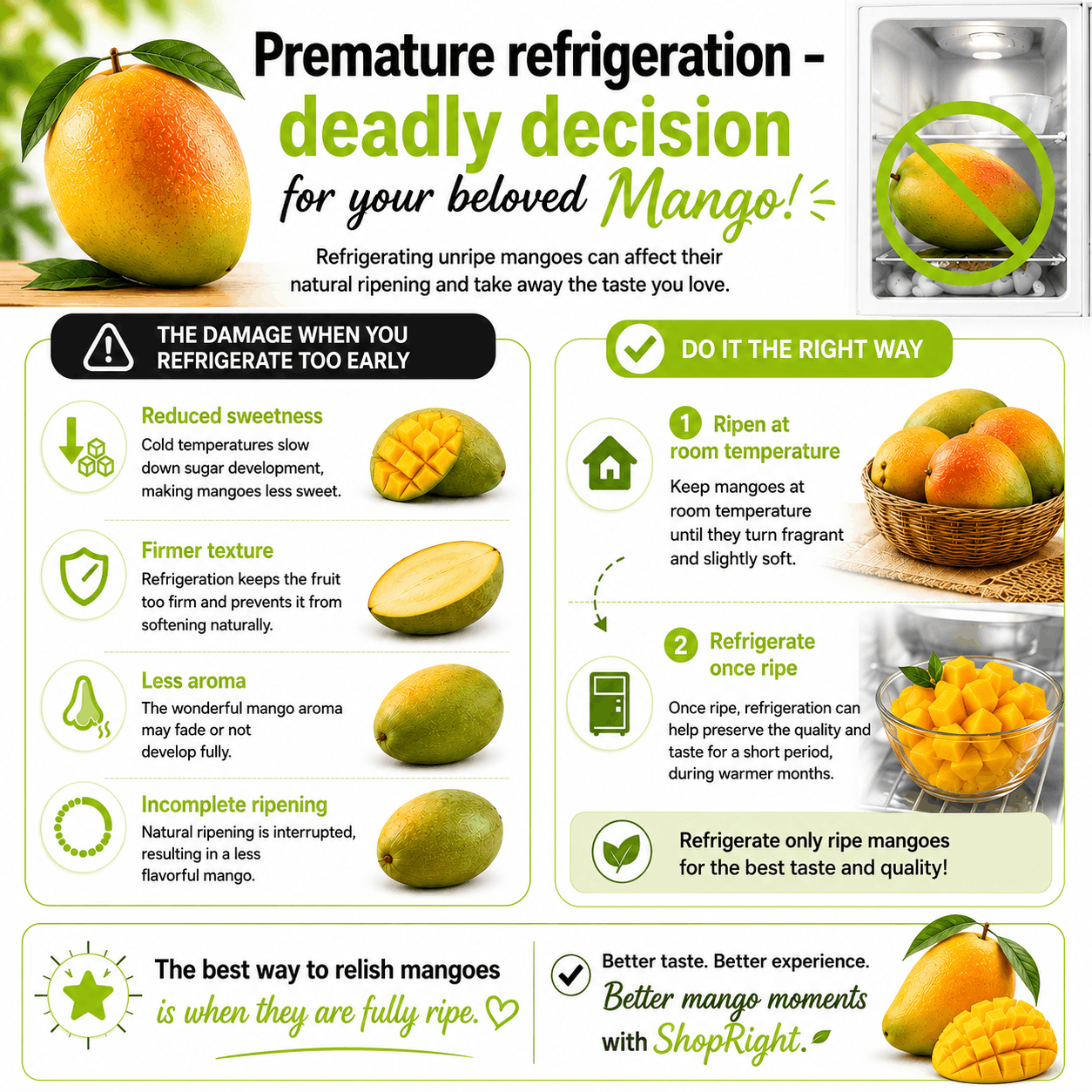
Once ripe, refrigeration can help preserve the quality and taste of your mangoes for a short period, during warmer months. The best way to relish mangoes is when they are fully ripe.
Stone Fruits That Lose Flavor in the Fridge
There are a few fruits like peaches, nectarines, plums, and apricots that are categorized as Stone fruits. These fruits are the most flavorful and highly juicy fruits available. They ripen naturally and transform into beautiful fruit only if they are allowed to do so at normal room temperature. Unless adequately ripened, putting these fruits in the fridge will be a suicidal attempt, making the refrigerator their graveyard. People worldwide love having peaches, nectarines, plums, and apricots in their kitchens as they keep developing sweetness and aroma even after harvesting. It makes little sense to interrupt the ripening process and leave these stone fruits tasting dull.
Peaches
Room temperature helps fresh peaches ripen, making them softer, juicier, and sweeter each day. Never refrigerate them before ripening unless you want them to develop a dry, mealy texture that lacks their signature flavor. Follow this simple peach storage tip. Your kitchen countertop is an ideal place for them to become flavorful. If you have to, then go ahead and refrigerate them once they have ripened. Refrigeration can be a help in extending their freshness for a few more days, but it is advisable to eat them fresh when at room temperature for maximum pleasure.
Nectarines
Like peaches, nectarines also love ripening naturally on your kitchen countertop. As part of good storage practice, place nectarines in a fruit bowl away from direct sunlight and check daily. A little flip will prove beneficial to the ripening process. Once ripe, you are at liberty to refrigerate them, but not for long.
Plums
The overall ripening process in plums is comparatively slow after harvesting. Plums gradually soften and develop their unique sweet flavor and rich aroma. If you are truly concerned about how to store plums correctly, you would never let them inside your refrigerator. If you can't resist the temptation, go ahead and refrigerate them only after they are fully ripe. Your refrigerator will be a home to your plums for a few days, while preserving their quality and some amount of flavor.
Apricots
Let your warm room environment be friends with delicate, darling apricots while they ripen. Why reduce their juiciness, special taste, and mouth-watering aroma with premature refrigeration?
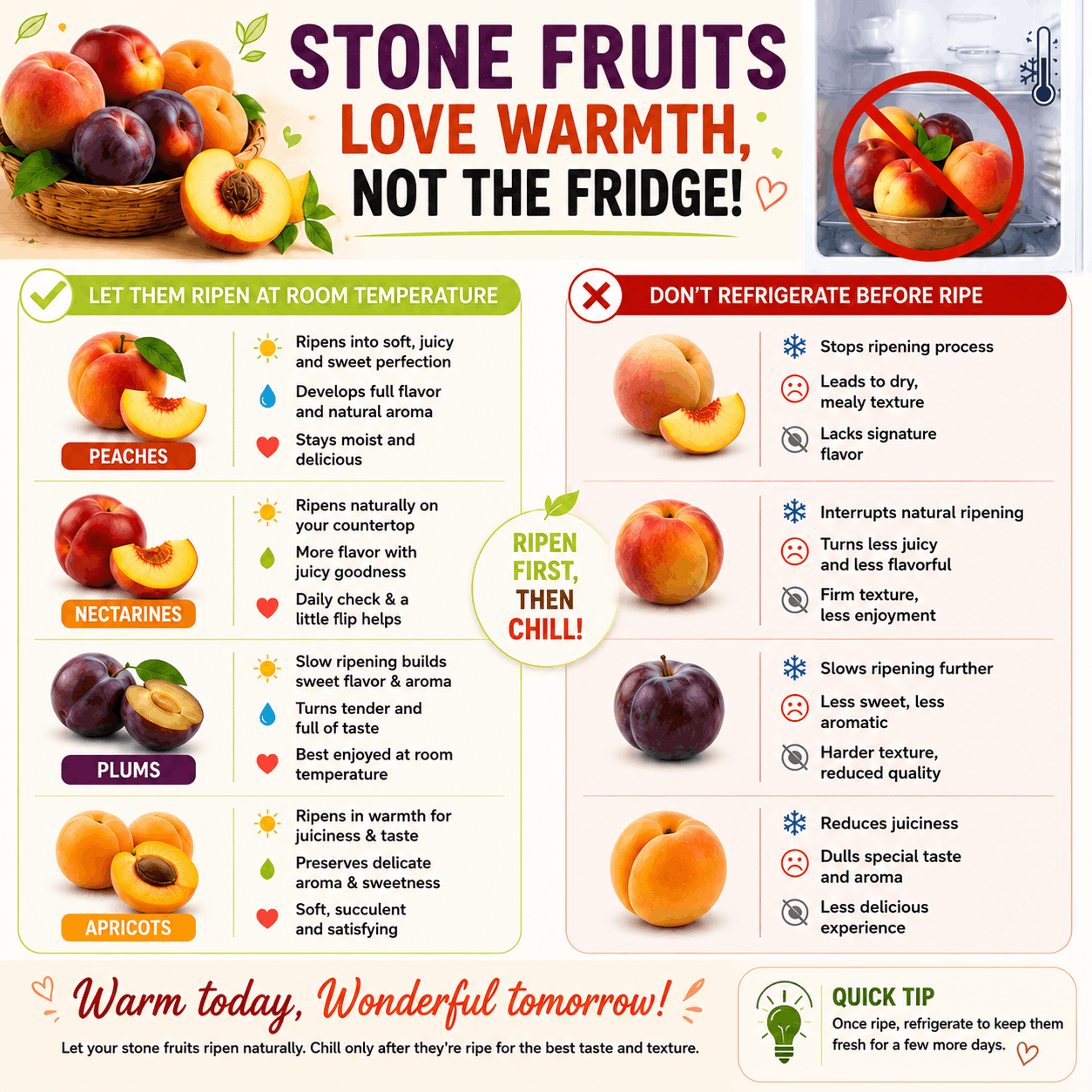
The correct stone fruit storage method helps your family relish their full natural taste while minimizing spoilage and wastage. Let the tantalizing fragrances from peaches, nectarines, plums, and apricots fill the air, broadcasting each day, "We are Ripening."
Tropical Fruits That Prefer Room Temperature
If you consider the natural habitat of tropical fruits, it is generally warm weather that not only helps them ripen but also achieves their final soft, sweet form. This means that such fruits perform better when kept outside the refrigerator at room temperature during their ripening process. Cold temperatures are not what these fruits welcome because they negatively affect the texture, sweetness, and fragrance of tropical fruits, with the result that even you won't love them.
Pineapple
Our senses come alive at the thought of enjoying its ester-based mouthwatering aroma. Pineapples continue to ripen even after being harvested. It is essential to understand that their flavor further matures even after your purchase is done. An ideal pineapple storage tip is to preserve the whole (uncut) pineapple at room temperature. You should do this if you plan to consume it soon. Once cut, it shouldn't be kept outside. Refrigeration is the only option to maintain its freshness.
Papaya
Ripe papaya is the best fruit for your stomach. It not only supports natural bowel movement but also helps keep your overall digestive system healthy. A great fruit for people with diabetes and senior adults. The best method to store papaya is to allow it to soften and ripen naturally on your kitchen countertop. Bring the fruit closer to your nose every day to know its progress. If the fruit feels warm, soft, and smells lavishly sweet, invite your family members to enjoy it.
For some reason, if you bring home an unripe papaya, you may refrigerate it. This cold environment slows down the ripening process, preventing the fruit from reaching its ideal softness, aroma, and sweetness.
Passion Fruit
People enjoy passion fruit for its strong, sweet-tart taste and several health benefits. It's refreshing balance of bright acidity and natural sweetness is unique to this fruit. Passion fruit comes with the goodness of Vitamin C for stronger immunity and Vitamin A for beautiful skin and enhanced vision health. Like any other tropical fruit, papaya also develops a better aroma and mouth-watering flavor at room temperature. Once completely ripe, its skin becomes soft and starts to wrinkle. When you experience this sign, either consume it or shift it to your refrigerator for extended life.
Dragon Fruit
Dragon fruit is known for it.
- Its striking, vibrant appearance,
- Its mildly sweet and refreshing taste, and
- Its impressive nutritional profile.
Dragon fruit delivers a unique blend of superior texture and characteristic taste, making it a great health choice for smoothies, fruit bowls, and salads. You get to enjoy every part of this fruit only if it is allowed to ripen naturally. Chilling kills the benefits of this beautiful fruit. Dragon fruit is expected to deliver its subtle sweetness as a result, but premature refrigeration hinders the process. So, enjoy this fruit in the form that nature delivers it to you.
Guava
People of all ages love guava fruit for its delicious, sweet-and-tart tropical flavor. Guava has earned its status as a nutrient-dense "superfood". This guava fruit is a great friend as it carries a high concentration of vitamins, minerals, and antioxidants.
A simple example would be that just a 100-gram serving offers up to 4 times more Vitamin C than an orange. People also love it for its abundant quantity of dietary fiber and protective plant compounds like lycopene and flavonoids.
If your body is undergoing oxidative stress, cellular damage from free radicals, and some kind of inflammation, pick up a few ripe pink or red guavas from your grocery store. The potent antioxidants named lycopene and flavonoids found in these varieties of guava help you combat these health issues and provide relief from inflammatory effects.
Each day, guavas become ripe, fragrant, and softer, making them incredibly versatile for both sweet and savory dishes. Putting them in cold storage or a refrigerator before ripening is not what health experts recommend, as this artificial environment interferes with their natural process, making them less enjoyable.
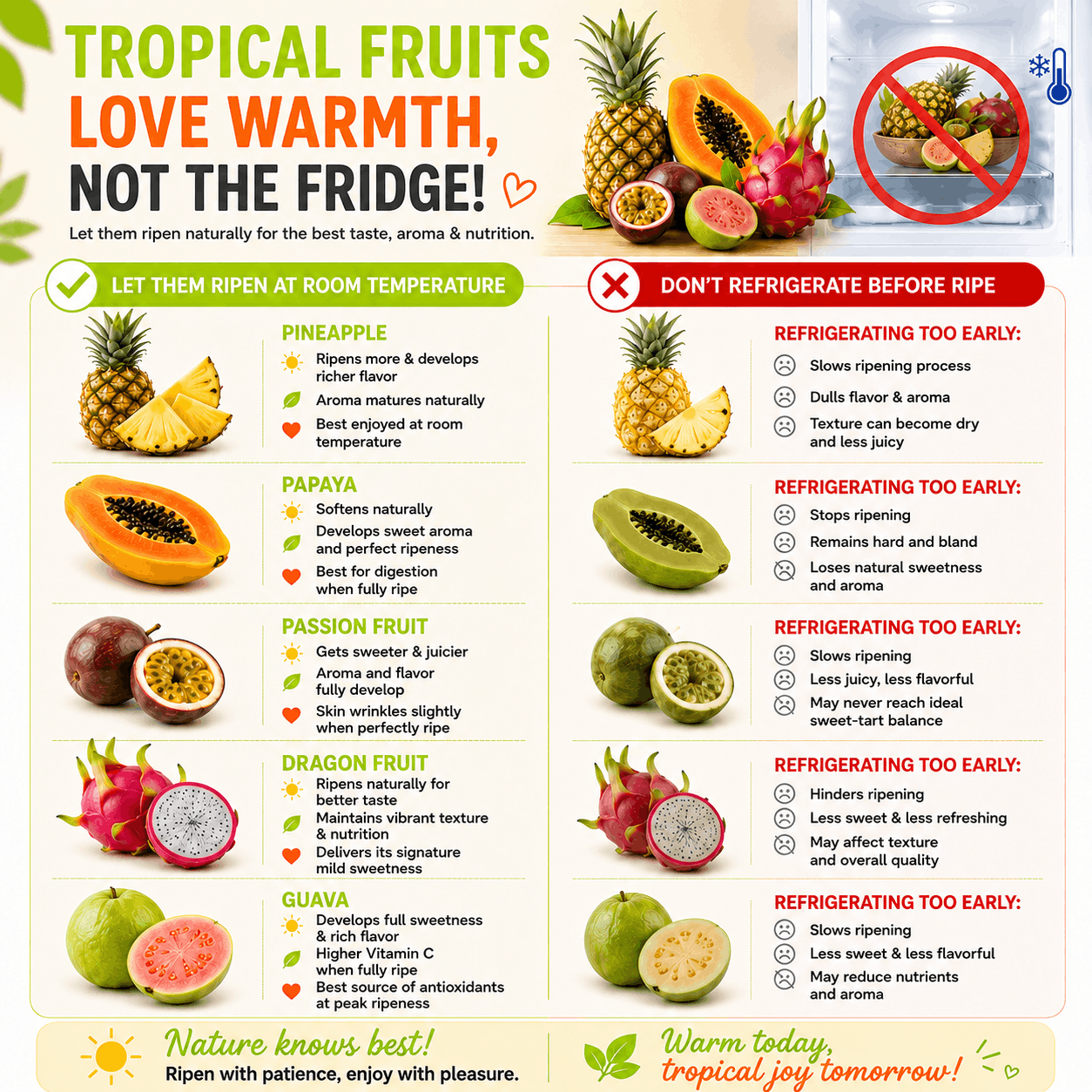
If you seriously want to preserve the qualities of these unique tropical fruits, you need to follow the tropical fruit storage protocols. The tropical fruits discussed above develop excellently at room temperature. Refrigerating them should be the last alternative after reaching peak ripeness.
Fruits That Actually Belong in the Refrigerator
If you have developed a feeling that your investment in owning a refrigerator is a waste, then shed off your worries and understand that a fridge is a great gadget if used strategically.
Fruits discussed above dislike early refrigeration but may genuinely benefit from cold storage when stored after ripening. Contrary to the above-mentioned fruits, there are a few others that maximize their freshness and reduce spoilage when refrigerated properly. Let's discuss them.
Berries
Berries themselves are a family. Strawberries, blueberries, raspberries, and blackberries belong to this family. Common characteristics they all carry are delicate structures and short shelf lives. Once harvested, these berries should be consumed shortly for optimum taste and flavor. In case immediate consumption is not possible, the best way to store berries is to refrigerate them. Experts recommend leaving them unwashed until ready to eat. Remember that excess moisture isn't good for your beloved berries; it encourages mold growth in them.
Grapes
Grapes become soft when ripe. If you want your grapes to stay crisp and refreshing, preserve them in your refrigerator. You need to store them in a ventilated container to keep them fresh. Remember to wash them only when you plan to consume them.
Cherries
Cherry plants are unique in the sense that they need a cold winter to wake up and produce fruit in the spring season, whereas they need beautiful warm summers to grow and ripen the cherry fruits. Cherries don't love room temperatures. Unfortunately, they immediately lose freshness at room temperature, making refrigeration the best solution to maintain their firmness and sweetness.
Apples
Yes, beautiful red apples love cold weather. Chilling winters between 0°C and 7°Care home to the apple trees. Neither will their dormancy break, nor will they ever blossom to produce the fruit properly.
Apples naturally last much longer in colder environments. Temperature in the fridge slows their aging process, keeping them fresh, sweet, and juicy for a long time. Switch to a proper refrigerated fruit storage procedure to help your apples stay fresh and enjoyable for weeks.
Citrus Fruits
Enriched with the goodness of fibers and Vitamin C, oranges, lemons, limes, and grapefruits also deliver several benefits when refrigerated. If you plan to store them for a longer duration, go ahead and refrigerate them. Although they may remain in good condition for several days when kept at room temperature. These citrus fruits are your best friends when it comes to staying hydrated in hot summers.
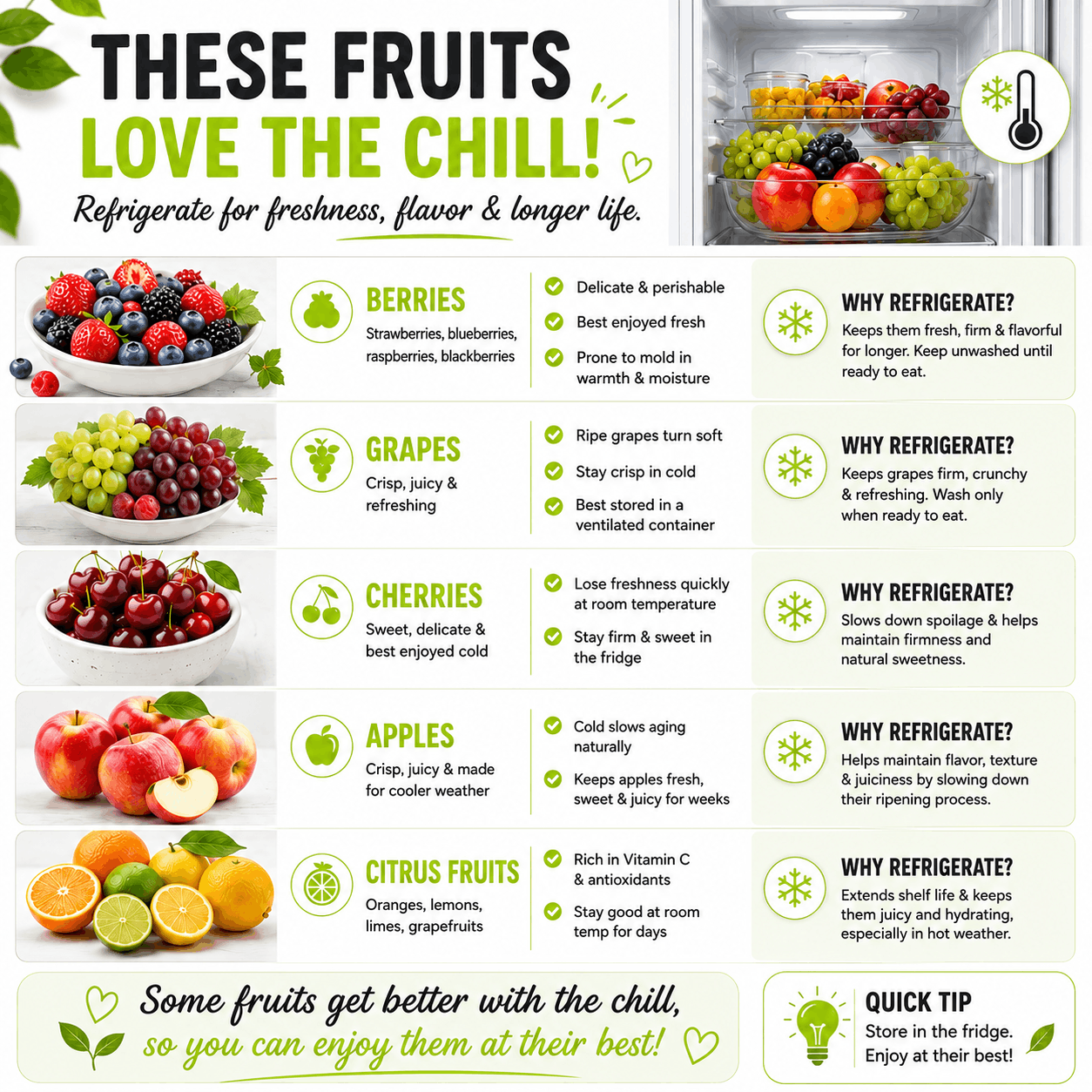
These examples demonstrate that there are indeed Fruits that should be refrigerated. The goal is not to avoid refrigeration altogether but to understand which fruits benefit from it and when it should be used for keeping fruit fresh.
Signs You're Storing Fruit the Wrong Way
When you store fruits improperly, they show obvious signs that are very visible, and the changes that happen are quite noticeable.
When you see any of the following indicators, don't panic. Simply identify them and take action to save the remaining fruit.
The visible indicators:
- Mushy or excessively soft texture
- Loss of sweetness and flavor
- Uneven ripening
- Wrinkled or dried-up skin
- Premature mold or spoilage
When someone asks, "Why does fruit go bad quickly?" The answer actually lies in improper temperature, poor airflow, and storing incompatible fruits together.
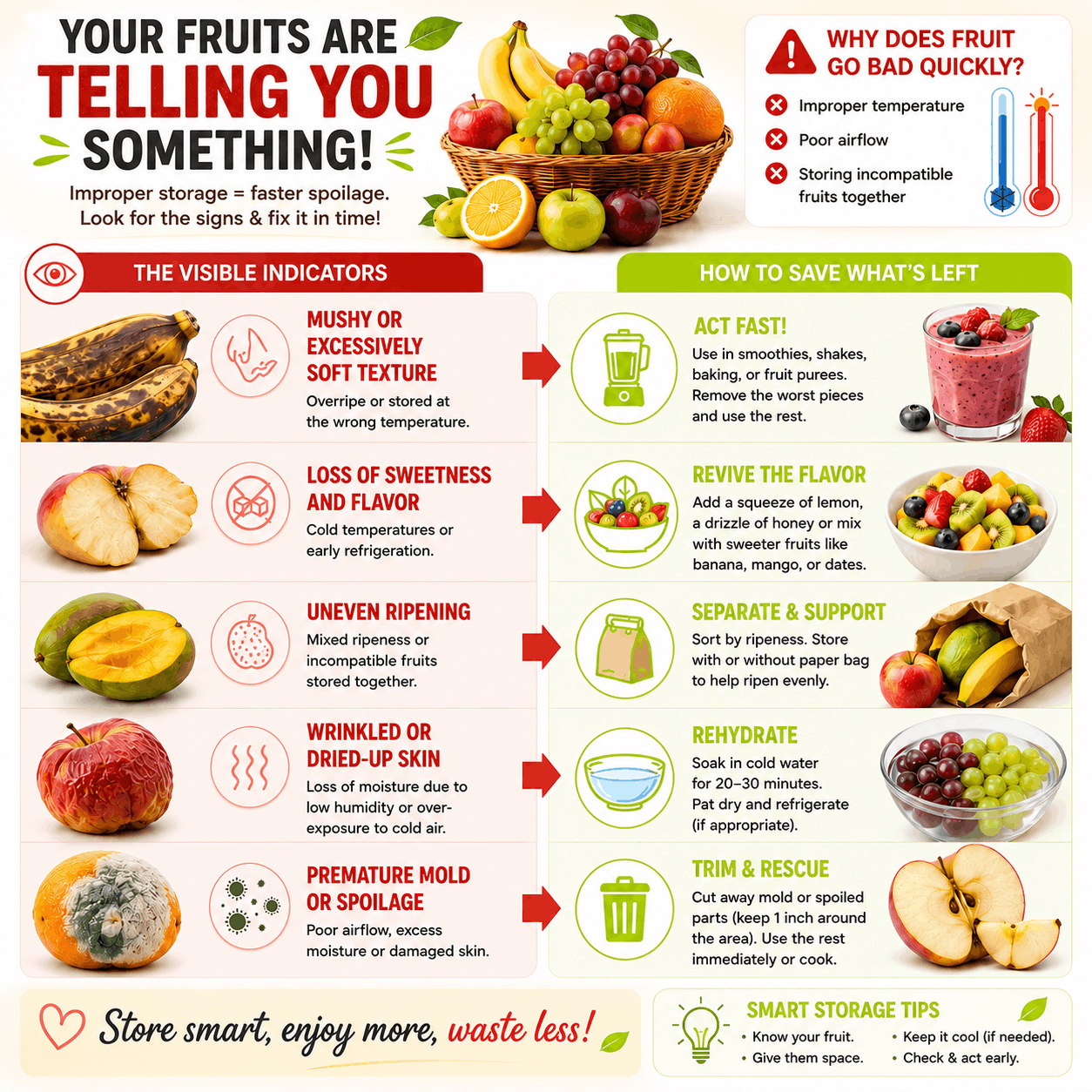
Most households commit these common food storage errors. Hence, it's essential to be smart at identifying spoiled fruit signs. This approach will help you adjust your storage methods to suit your fruits and save them from getting wasted.
Smart Fruit Storage Tips to Reduce Food Waste
Proper fruit storage and reducing food wastage require us to act with responsibility. All you need is a warm smile and a few simple daily habits to achieve both these goals in the interest of your family.
We have listed a few practical fruit preservation tips. Simply follow them to avoid wastage:
- Begin by separating ethylene-producing fruits such as bananas and avocados from sensitive fruits that dislike ethylene.
- Set a daily reminder to monitor the ripeness of your fruits. It is not advisable to store everything at once and then forget about it.
- Make fruit bowls your strategic friends. Use them to foster natural ripening.
- Airtight containers do no good. Use well-ventilated containers to store your fruits.
- Rotate and place older produce in the front. This will help you consume them first.
- Avoid overbuying and impulse buying. Buy quantities that match your family's needs. Buy fresh and buy in smaller quantities.
These are simple and smart kitchen storage hacks. They help reduce food waste and improve the quality of your meals. Switch to good, fresh produce storage practices. Save money, time, and effort by preventing unnecessary spoilage.
Similar Blog: Tips for Storing Fruits and Vegetables Fresh Longer in the Fridge
Choosing Fresh Fruits Starts at the Grocery Store
When at your favorite grocery store, make sure to buy high-quality produce. They increase your chances of enjoying better flavor and longer shelf life. The logic of buying high-quality fruits implies that you want your family to eat healthily and stay healthy.
How do you determine the best product for your family when shopping?
- Begin by evaluating the product's ripeness. It depends on when you plan to eat that fruit.
- Have an eye for fruits that have bruises, cuts, or signs of mold; avoid them.
- Make sure to purchase quantities that match your weekly or fortnightly needs. Avoid excess buying.
- Always go with the season because seasonal fruits are often affordable, fresher, and more flavorful. Your body, too, will thank you.
Follow these proven grocery shopping tips. They will help you choose fresh fruit. Following these tips regularly will make you a pro at buying quality produce from your grocery supermarket. One important thing that surfaces during all this discussion is that you should always remain careful while shopping for your groceries at the store. Never rush through the buying process; you might overlook an essential fact.
Find Fresh Fruits and Everyday Essentials at ShopRight
Quality storage starts with quality produce. At Shopright, customers can explore a wide selection of fresh fruits and groceries every day for the whole family.
Whether you're looking for seasonal mangoes, red juicy apples, juicy berries, or tropical favorites, buy fresh fruits in the Cayman Islands from Shopright. We offer quality that you can trust and enjoy. As a trusted grocery store in the Cayman Islands, we focus on providing excellent fresh produce, making your shopping experience memorable. Us fruits and vegetables are backed by consistently high quality.
Choosing fresh ingredients makes healthy eating easier and helps families prepare nutritious meals every day.
Conclusion
Refrigeration comes with benefits and drawbacks. It is not the only solution to preserve your fruit properly, but a little sense of awareness and understanding can help you do it right. Some fruits thrive in cold storage, while others develop their best flavor, texture, and aroma at room temperature.
Hence, it is essential to understand that different fruits require different temperatures and environments for sustained storage. When these fruits are in their favorable environment, they significantly improve taste, resulting in reduced wastage. Switching to appropriate storage processes protects freshness, preserves natural sweetness, and helps households save money (and efforts) by extending the useful life of produce.
Let go of the habit of placing every fruit inside the refrigerator once you return from your grocery store. Take a moment to consider the storage needs of each fruit.
Bringing a small change to your habits will result in better-tasting fruit, less food waste, and a smarter approach to healthy eating in 2026 and beyond.



.jpg)