 Login with Google
 Your Shopping Cart is empty!
  App store
 Google Play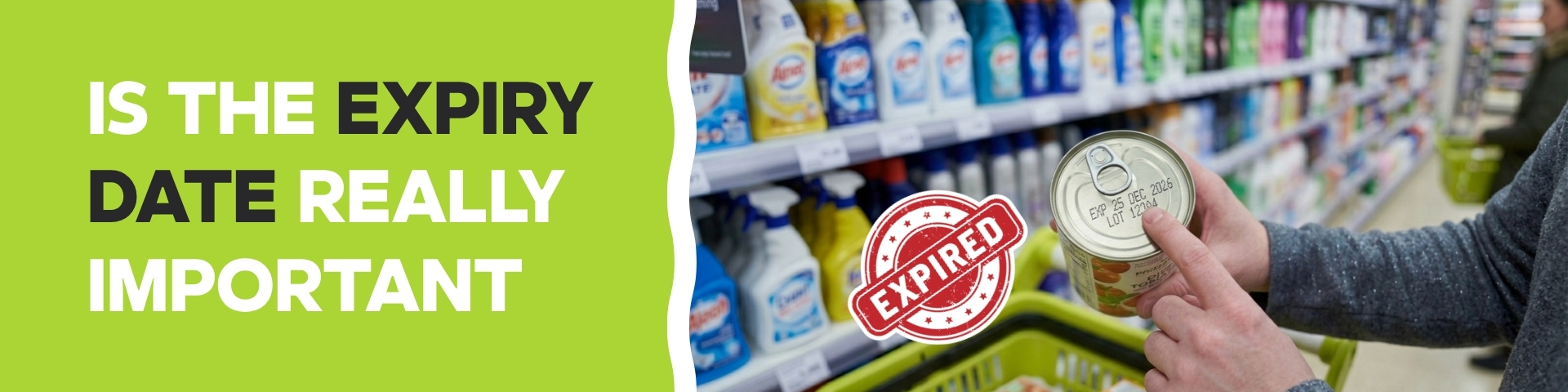
Suppose you are at your favorite supermarket and a carton of yogurt catches your attention. You suddenly realize that the kids at home also wanted to relish yoghurt. So, you pick up the carton and check out the date of expiry. You are almost overwhelmed to notice that the date had passed by a day or two. Your next action will be to immediately throw that carton into the trash without even checking the rest of the details.
If you have had a similar experience, then you are not alone.
Visit any household, and they would agree that they throw away large amounts of perfectly usable food simply because of confusion around food labels and their expiry dates. Many people take every printed date for granted. A printed date doesn’t mean the food instantly becomes dangerous once the day passes that date.
Now the questions that come to our mind are what an expiry date really is, what myths you should stay away from, and why expiry dates are so important.
The simplest answer to all these questions is understanding the real meaning of the expiry date. This knowledge will help you make safer and smarter decisions when buying food and food products, especially the packaged ones. This awareness will ensure a reduction in the waste of food items that happens at your home.
This food expiration date guide will deal with the following facts:
- Understanding the difference between food quality and food safety.
- Explain why labels exist in the first place
- Clear major misunderstandings surrounding the expiration date topic.
Is the expiry date important? Let’s understand in detail.
What Do Expiry Dates Actually Mean?
Literally speaking, explaining the expiry date concept shouldn’t be so complicated.
Just because food products use different types of date labels, buyers tend to get confused and don’t know how to respond or react to these different label types.First things first. If you understand these food labeling terms from a customer’s perspective, you can easily determine if a product is unsafe for you or has simply passed its peak quality period.
Here, we will touch base with four essential concepts.
Expiry Date
An expiry date in standard terms indicates the last date after which that product should be consumed. (safety concerns) After this date has passed, the manufacturer cannot be held responsible for the product that is no longer safe for consumption.
Best Before Date
Many users consider the best-before date as the real culprit for this confusion. But the fact is that people aren’t aware of the true concept of the best-before date. The “best before” date has a lot to do with the product quality than its safety. This date, in reality, suggests that consumers use that product before the mentioned date if they wish to enjoy the true product quality. Based on calculations, it is very much possible that the food product may lose its freshness, texture, or flavor after this date. This date also implies that while the quality has decreased, the product is still safe for consumption if stored properly. Because of sheer ignorance, many customers confuse the best-before date with the expiry date.
Use By Date
Use-by dates are usually safety-focused indicators. “Use by” dates are generally safety-focused. They indicate the final date till which that product can be consumed. The purpose of use-by dates is to save you from potential health risks that might occur from spoilage or harmful bacteria growth. Perishable foods such as dairy, meat, and ready-to-eat meals may develop bacteria and may not remain suitable for consumption.
Sell By Date
This is a simpler type of label where the sell-by date indicates that the retailer must put in efforts to sell that specific product by the mentioned date. This date label helps a shopkeeper in managing their inventory. This label in no way suggests that the food will become unsafe after that date has passed.
Knowing these labels helps consumers make informed choices and avoid unnecessary food waste.
Similar Blog: Decoding Food Labels: Sell-By vs. Use-By vs. Best-By
Why Expiry Dates Exist in the First Place
Have you ever wondered why food products have expiry dates?
You can weigh the reason behind placing this label against several important reasons.
The first reason is to protect consumers against foodborne illnesses. Using scientific testing methods, manufacturers determine the time during which a product remains safe for consumption. These tests also indicate the period during which the quality will remain acceptable under proper storage conditions.
Another beautiful reason is that such date labels help maintain the consistency of food products. Most companies intend their customers to feel the same experience in terms of taste, texture, flavor, and freshness when they buy their products. Any change in taste, texture, flavor, and freshness might be considered a compromised quality.
Many countries worldwide insist that manufacturers comply with food safety regulations. Hence, proper labeling on packaged foods has become mandatory.
Every processed food product has a defined shelf life beyond which it shouldn’t be consumed. Hence, consumers must understand the food shelf life concept. With this knowledge, the consumers will realize that the shelf life of a product depends on factors like packaging, ingredients, storage temperature, and moisture exposure.
The discussion till this point will guide consumers on the importance and purpose of the expiration date. These labels ensure that consumers enjoy safer and better-quality food choices.
Is the Expiry Date Always About Safety?
The next thought that comes to our mind is whether the expiry date always talks about safety? The answer is a simple “No.”
If the label is not about safety every time, then consumers need not panic, as these food date labels do not highlight immediate danger. Before jumping to any conclusion, we must understand the difference between food safety and quality.
- “Use By” dates are usually about safety. They inform the users that a specific food item must be consumed before the mentioned date, after which its consumption might endanger the user’s health.
- “Best Before” dates, on the other hand, talk about the quality of the product. A simple understanding can be that after the mentioned date, the food product will still be safe to consume, but then the quality won’t be as good as the original.
If the products are stored and preserved under proper conditions, they remain safe even after the “best before” date has passed. They show no signs of spoilage, and you may go ahead and buy them. Once these products reach your home, you either need to consume them immediately or store them in the refrigerator.
During your visit to the supermarket, check out the labels on products like dry pasta, canned foods, rice, and some packaged snacks. They would mostly carry a best-before date, indicating that they are still usable after that date.
This leads to one of the most common questions: Is expired food safe to eat?The answer to this question can’t be as direct as one would feel, because it depends on factors like the type of food, the way in which it was stored, and whether it shows any sign of spoilage. If you have satisfactory answers to all these questions, that food can very well be consumed.
As responsible parents, you need to make sure not to serve any expired food to children, even if it is safe and shows no sign of spoilage. Children are delicate; their immunity and digestive system are not as strong as those of adults. Hence, it is advisable to keep children away from such food items.
There is a term called “fear-based food disposal.” Many times, an inadequate understanding of the best-before food safety concept may result in throwing away food that could have been consumed without any fear. So mothers need to know and understand the best-before food safety concept while still prioritizing health.
Many so-called expired food myths come from misunderstanding the purpose of different labels.
Common Myths About Expiry Dates
This, perhaps, will be the most interesting section of this blog. Many expiry date myths exist that cause unnecessary panic and waste of food items.
Myth 1: All expired food is unsafe
This myth is one of the biggest Food expiration delusions. These dates are just indicative labels. Some foods may still be safe after a best-before date if stored properly.
Myth 2: You must throw food away immediately after the date
This is not always true. Look around when at a supermarket, and you will see many shelf-stable foods. These foods can still be usable beyond their labeled dates.
Myth 3: Expiry dates are always exact
Expiry dates are set partially on calculations, and partially on assumptions. Manufacturers are concerned about the consumers’ health and safety. Hence, they often use conservative estimates to make sure that both quality and safety remain intact.
Myth 4: Smell and appearance do not matter
We agree that labels are important. But beyond labels, checking the food, its physical appearance, odours of any type, or the development of green algae inside improperly stored food items also matters to a great extent.
Understanding these common food safety myths helps consumers make balanced decisions rather than acting purely out of fear.
Learning real facts about expired food can also help reduce unnecessary household waste.
When You Should Never Ignore Expiry Dates
As a consumer, you do have the right to override a best-before date and buy the product for consumption, but there can be instances when caution becomes critical for certain products.
There are certain high-risk foods available in the store. They should never be consumed after their safety-related dates.
A few examples include:
- Dairy products
- Meat and poultry
- Seafood
- Ready-to-eat meals
- Baby food
The above-mentioned food products are listed under the high-risk category. Hence, ignoring dates on them can be a risky move. It can result in food poisoning and harmful bacterial growth, and both are injurious to your health.
When you come across foods you should not eat after expiry, you need to take that extra care, as it is essential for protecting your family's health.
Remember that dairy products are the riskiest of all. Consuming their spoiled version can lead to serious stomach issues and gastrointestinal infections, resulting in severe repercussions. The date labels on these products are there to make you aware of the possible risks of expired dairy products.
Adapting a strong food poisoning prevention strategy will help keep you and your household safe and healthy. As a smart and well-informed buyer, you must follow basic food safety tips, which is way better than taking unnecessary and unknown risks.
How to Check If Food Is Still Safe to Eat
Date labels are essential, but they shouldn’t be the only benchmark to decide if a specific food can be consumed or not.
There are a couple of tricks that can help you tell if the food is spoiled or is good for consumption. These tricks will also help you make smarter decisions without needing special tools or complex gadgets.
Be your family’s, Sherlock Holmes.
Smell Test
You should thank your smart nose. If you experience a sour or unusual smell while opening the food package, it is often a strong warning sign.
Texture Changes
Textures tell a lot before you can try the product. Look closely. If you find slimy surfaces or unusual softness, they may signal spoilage.
Visual Signs
If you see mold building up, discoloration, or unusual spots, simply put the product aside; it isn’t right for consumption.
Storage Conditions
Where did you pick up that product from? Fresh food can also spoil quickly if stored improperly. Things that should have been inside a refrigerator are left outside at room temperature for a longer duration. This can raise suspicion.
It is always a great idea to identify the signs that food has gone bad. This simple-looking food safety checklist will prove important and come in handy for every household.
Even after you have bought the food products and have preserved them in your fridge, regularly checking food for freshness will ensure low waste while helping your family stay safe.
Similar Blog: Tips for Storing Fruits and Vegetables Fresh Longer in the Fridge
Smart Tips to Reduce Food Waste at Home
Wastage of food is a serious matter and is never in the interest of your family or society. Food wastage mostly happens because of the misunderstanding associated with expiry labels. Hence, it is more important to understand the expiration labels properly. This awareness helps your household stop or at least avoid unnecessary food wastage.
Let’s understand a few practical ways to reduce food waste at home:
Plan Meals Properly
The best approach to reducing food wastage is buying only what you realistically need.
Store Food Correctly
Proper refrigeration is essential. Use airtight storage containers to extend food shelf life.
Freeze Extra Food
Extra food goes into the deep freezer, preserving the freshness and reducing waste.
Use Leftovers Creatively
Why throw away the leftover food items when you can turn them into soups, wraps, casseroles, or stir-fries? A great way to offer food variety to your family, kids will especially love and welcome such mindful changes.
You can save money while supporting more sustainable kitchen habits. Follow these simple Food Waste Tips to make an informed decision.
Always check out the stock of each food item in your household before preparing your grocery list. This approach is an essential step towards smart grocery planning. Doing so will help you save money, manage your budget well, and avoid overbuying products that you may never use.
Similar Blog: A Guide to Understanding Food Labels and Nutritional Information
Shop Fresh and Smart with Shopright
At Shopright, customers can shop with confidence. They have access to properly labeled and high-quality grocery products to make your cooking a happier experience.
Whether you are looking for fresh produce, dairy products, pantry essentials, or frozen foods, choose quality products from a trusted grocery store in Cayman.
Shopright ensures that every product is clearly labeled. We offer dependable freshness standards to enable shoppers to make informed decisions while buying essentials for their families.
If you want to buy fresh food online or shop conveniently for daily essentials, develop smarter and safer grocery habits today.
Conclusion
As we move towards the end of this guide, ask yourself, “Is the expiry date really important?”
Yes, the expiry date is essential, but every buyer must develop the necessary understanding. This understanding will help them know the real meaning of each label type.
Do understand that these aren’t meant to signal danger. Some labels focus on quality, while others focus on safety.
A smart buyer is the one who can differentiate between “best before,” “use by,” and other food labels. Instead of being impulsive while making your purchase, decide what best protects your family's health and maintains your budget.
Understanding food labels also helps reduce unnecessary waste, encourages smarter shopping habits, and supports a more sustainable kitchen.
Wear your Smart Consumer Cap before next time looking at a date label,
- Do not panic immediately,
- Check the type of label,
- Inspect the food properly,
- Make an informed decision.
Smarter consumers waste less, shop better, and stay safer.